
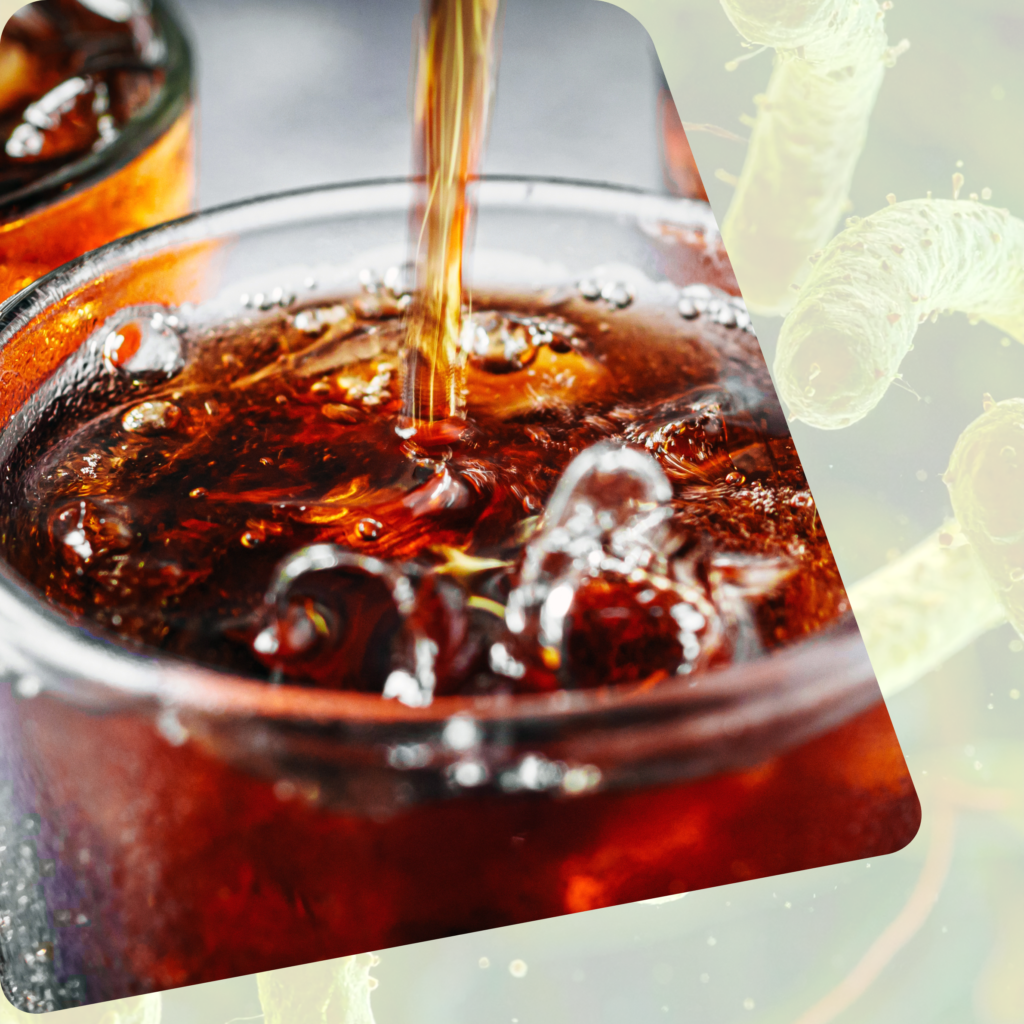
A Fizz with Consequences
Picture this: you crack open a can of soda, hear the satisfying fizz, and take that first sweet sip. Refreshing? Maybe. Harmless? Not exactly.
While soda may seem like a quick pick-me-up, inside your digestive system it’s like pouring petrol on a delicate microbial ecosystem. The trillions of microbes living in your intestines — your gut microbiome or intestinal flora — don’t dance to the beat of sugar and artificial fizz. Instead, soda disrupts harmony, feeding the troublemakers while starving the beneficial species.
So let’s pull back the curtain: What does soda really do to your gut microbiome, and how can you restore microbial balance to protect digestive and metabolic health?
The Microbiome — Your Inner Ecosystem
Your gut is home to over 100 trillion microorganisms. Think of it as a rainforest: diverse, balanced, and resilient when cared for. When this balance tips — a state known as gut dysbiosis — health issues ripple out: bloating, fatigue, brain fog, even low-grade inflammation 1.
- Good microbes such as Bifidobacteria and Lactobacilli help digest fibre, synthesise vitamins, and calm inflammatory responses.
They ferment dietary fibre and resistant starch to produce short-chain fatty acids (SCFAs) — notably butyrate, acetate, and propionate — crucial for maintaining intestinal-barrier integrity, reducing inflammation, feeding colon cells, and supporting immune stability 2. - Opportunistic microbes thrive on sugar and can crowd out the beneficial species when given the chance.
And what does soda do? It tips the scale toward the troublemakers 1.
What Soda Does to Your Gut Microbiome
1. Sugar Tsunami
A single can of soda can contain up to 10 teaspoons of sugar. For your microbes, that’s like throwing a massive party — but only certain species are invited.
- Sugar-loving bacteria (like some Clostridia species) multiply quickly.
- Fibre-loving bacteria —the ones that produce SCFAs like butyrate—get left behind.
- The result: less butyrate → weaker gut lining → more inflammatory signalling.
Study Insight: High-sugar diets reduce microbial diversity and SCFA production, directly weakening the intestinal barrier 1.
Aside: Sugary beverages pose greater metabolic risk than equivalent sugars in solid foods because liquid sugars are absorbed faster and lack the fibre or protein “brake” that slows glucose metabolism 3.
This makes the sugar tsunami from soda especially damaging to gut and metabolic health.
2. Artificial Sweeteners — Not So Sweet
“Okay,” you say, “what if I drink diet soda?” Here’s the twist: artificial sweeteners, or more precisely non-nutritive sweeteners (NNS) — including saccharin, sucralose, aspartame, acesulfame-K, and stevia — can also disrupt the microbiome.
These non-caloric sweetening agents were designed to satisfy a sweet tooth without calories, yet research shows their effects are individual- and sweetener-specific 4.
- They may alter microbial composition, promoting glucose intolerance in some individuals.
- Certain NNS may impair gut-barrier function or increase intestinal permeability (“leaky gut”), allowing toxins to cross into the bloodstream.
Study Insight: In a 2022 human trial, Suez et al. found that 14 days of NNS use (saccharin, sucralose, aspartame, stevia) caused distinct, individualised shifts in the gut and oral microbiome and plasma metabolome.
Some participants — especially those using sucralose or saccharin — showed impaired glycaemic responses.
When their microbiota were transplanted into germ-free mice, the mice developed the same glucose dysregulation — evidence of a causal, microbiome-mediated effect 4 5.
3. Phosphoric Acid & Carbonation
That satisfying fizz in carbonated beverages adds acidity to your digestive tract.
Regular exposure can:
- Lower gut pH → favour acid-tolerant species while suppressing others.
- Alter mineral absorption — notably calcium, magnesium, and zinc.
- Irritate sensitive guts, intensifying bloating or reflux 1.
Over time, this acidic environment can strain the intestinal flora and affect nutrient uptake, contributing to digestive imbalance.
4. Additives & Colours
Preservatives such as sodium benzoate and synthetic colours don’t simply pass through unnoticed:
- They can stress microbial communities.
- Some additives interact with the gut epithelium or microbiota, disturbing normal signalling.
New Finding: A 2024 study on the ultra-potent sweetener neotame showed that even realistic exposure can disrupt the intestinal epithelial barrier (via the T1R3 receptor), increase bacterial biofilm formation, and enhance bacterial adhesion/invasion in co-culture models — suggesting a plausible leaky-gut + dysbiosis mechanism 6.
So with soda, you’re not just drinking sugar or sweeteners — it’s a cocktail of sucrose (or NNS), acidity, carbonation, and additives that challenge gut health on multiple fronts.
Long-Term Gut Consequences
Regular soda drinking doesn’t just affect your waistline — it reshapes your gut microbiome and metabolic health over time. Chronic intake is linked with:
- Lower microbial diversity, a red flag for poor gut resilience 1
- Reduced SCFA production and weakened intestinal barrier integrity, allowing inflammatory molecules to enter circulation 1
- Metabolic shifts that increase the risk of insulin resistance, fatty-liver disease, and metabolic syndrome 7
- Gut–brain axis disruption leading to mood dips, fatigue, and brain fog 7
Study Insight: Epidemiological and mechanistic studies confirm that sugar-sweetened beverages drive inflammatory gut profiles and systemic metabolic stress 7.
Given the emerging evidence on non-nutritive sweeteners (NNS) and gut-barrier disruption 6, even “diet” sodas may carry individual-specific risks depending on one’s microbiome composition 4.
(Learn more in our upcoming post on the Gut–Brain Axis and mood regulation.)
How to Optimise Your Microbiome After Soda
Here’s the empowering part: your gut is remarkably adaptable. Within weeks of consistent diet and lifestyle changes, your microbial ecosystem can begin to normalise 8.
1. Feed the Right Microbes
- Fibre-rich foods: beans, lentils, oats, apples, leafy greens.
These nourish fibre-fermenting microbes that produce SCFAs (butyrate, acetate, propionate) — essential for a resilient intestinal barrier and anti-inflammatory gut environment.
→ Read more: How Fibre Restores Microbial Balance - Resistant starches: cooked + cooled potatoes, green bananas.
These act like “slow fuel,” feeding beneficial bacteria deeper in the colon.
2. Go Fermented
- Kefir, sauerkraut, kimchi, and plain yoghurt introduce live probiotic cultures that help rebalance the intestinal flora and crowd out gas-producing species.
→ See our guide: Fermented Foods for Microbial Balance
3. Polyphenols for Gut Resilience
- Berries, green tea, cocoa, and olive oil are loaded with polyphenols — antioxidant compounds many beneficial microbes thrive on, supporting microbial diversity and digestive health 1.
4. Hydration Swaps
Replace soda with:
- Filtered water with lemon or cucumber slices
- Herbal teas (peppermint, rooibos, chamomile)
- Unsweetened iced tea
- Low-sugar kombucha (if tolerated)
Each swap dilutes acidity and helps maintain microbial stability and metabolic balance.
5. Consistency Over Quick Fixes
Gut restoration isn’t about a one-time cleanse. It’s about cultivating a daily rhythm of fibre, plants, fermented foods, hydration, and mindful eating.
Reducing sugar, NNS, and processed drinks allows beneficial microbes to flourish, boosting microbial diversity, SCFA output, and immune regulation.
(If you’re unsure where to begin, you can book a personalised gut-health assessment for tailored support.)
Conclusion: Choose Wisely, Feed Wisely
Soda may seem harmless — even fun — but to your gut microbiome, it’s often a troublemaker.
Whether sugar-laden or “zero-calorie,” carbonated drinks combine sucrose or NNS, acidity, and additives that can tilt the microbial balance, weaken the intestinal barrier, and fuel low-grade inflammation through the gut–brain axis.
The good news? You can rewrite the story.
Every fibre-rich meal, every fermented bite, every colourful plant you eat is like replanting your microbial rainforest.
Optimising your gut health isn’t about perfection — it’s about small, consistent choices that let your digestive orchestra play in tune again.
Disclaimer
Love fizzy drinks but hate the way they make you feel?
Understanding how soda affects your gut microbiome is the first step.
This article is for educational purposes only and does not replace personalised medical advice.
If you experience persistent bloating, digestive discomfort, mood changes, or fatigue, consult a qualified healthcare professional for individual guidance.
References
- Tilg H, Zmora N, Adolph TE, Elinav E. The intestinal microbiota fuelling metabolic inflammation. Nat Rev Immunol. 2020; 20(1): 40–54. doi:10.1038/s41577-019-0198-4 | PubMed 31388093
- Makki K, Deehan EC, Walter J, Bäckhed F. The impact of dietary fiber on gut microbiota in host health and disease. Cell Host & Microbe. 2018; 23(6): 705–715. doi:10.1016/j.chom.2018.05.012 | PubMed 29902436
- Imamura F et al. Consumption of sugar-sweetened beverages, artificially sweetened beverages, and fruit juice and incidence of type 2 diabetes. BMJ. 2015; 351:h3576. doi:10.1136/bmj.h3576 | PubMed 26199070
- Suez J et al. Personalized microbiome-driven effects of non-nutritive sweeteners on human glucose tolerance. Cell. 2022; 185(18): 3307–3328.e19. doi:10.1016/j.cell.2022.07.016 | PubMed 35987213
- Page KA. A gut reaction: Microbiome-driven glycemic effects of non-nutritive sweeteners. Cell. 2022. PubMed 36055195
- Shil A, Ladeira Faria C, Walker C, Chichger H. The artificial sweetener neotame negatively regulates the intestinal epithelium directly through T1R3-signalling and indirectly through pathogenic changes to model gut bacteria. Front Nutr. 2024. doi:10.3389/fnut.2024.1366409 | PubMed 38721028
- Imamura F, O’Connor L, Ye Z, et al. Sugar-sweetened beverages and metabolic risk. BMJ. 2015; 351:h3576. doi:10.1136/bmj.h3576
- Conz AM, Barros EC et al. Long-term dietary fibre intake promotes gut microbial diversity and SCFA production. Referenced in Cell Host & Microbe. 2018 [see Ref 2].