
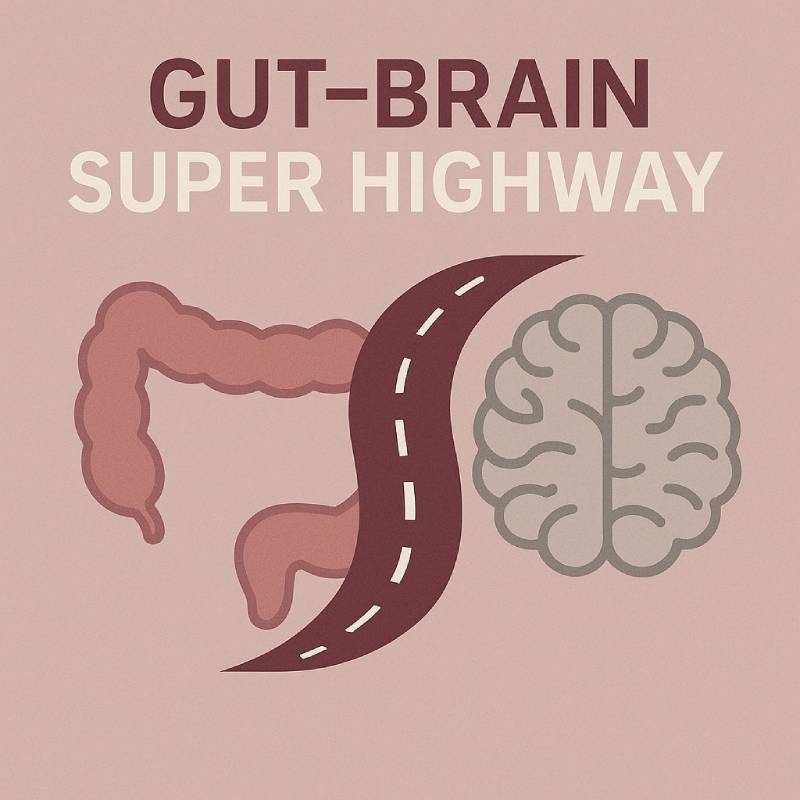
The Gut–Brain Superhighway: Women’s Hidden Health Power Unveiled

The Gut–Brain Superhighway: Women’s Hidden Health Power Unveiled

How Your Gut Microbiome Shapes Hormones, Mood, and Energy Like Never Before

Picture a living, humming city tucked inside your belly—streets of microbes trading molecules, lights flickering as messages travel up neural “freeways” to your brain. That metropolis is your gut microbiome, a community of bacteria, fungi, viruses, and other tiny citizens that doesn’t just help you digest food—it influences mood, hormones, immunity, sleep, and even energy day to day (the microbiota–gut–brain axis) [1–2]. For many women between 25 and 60, tuning into this city can be the difference between persistent bloating, constipation, brain fog… and feeling regulated, clear, and resilient.

Women’s Gut Microbiome: A Unique Ecosystem

Women’s microbiomes aren’t just “the same, but smaller.” They exhibit patterns of microbial diversity and a dynamic relationship with estrogen and progesterone—including a specialized set of microbes called the estrobolome that helps metabolize and recycle estrogen. That feedback loop can influence hormone balance, from mood to fertility, and shifts again in pregnancy and menopause [3–5]. In short: hormones shape microbes, microbes shape hormones—an elegant two-way dance at the core of women’s health.

Why Gut Problems Feel So Common in Women

Women experience IBS more often than men, with different symptom profiles, and many notice gut shifts around the menstrual cycle as hormones fluctuate [6–8]. When oestrogen/progesterone changes, gut motility and visceral sensitivity can change too—sometimes tipping toward constipation, bloating, or cramps [7–9]. There are also anatomical differences: studies show the female colon tends to be longer, which may contribute to slower transit and different symptom patterns [10–11]. Beyond IBS, conditions like coeliac disease are diagnosed more often in women, and gallstones are also more common—both linked, in part, to sex-hormone biology [12–15].

Beyond Digestion: The Gut–Brain Axis at Work

Your gut isn’t only a food processor; it’s a conversation hub. Microbial metabolites (like SCFAs) and neural/immune signals travel along the gut–brain axis, shaping mood, stress response, sleep, and cognition [1–2]. At the same time, your immune system listens in—balanced microbes help keep inflammation in check, which matters for long-term health in women [16].

How to Nurture Your Gut (Without Overcomplicating It)

You don’t need perfection—just consistent, evidence-based habits that support microbiome diversity and a calmer gut–brain conversation:

  • Eat for diversity. A plant-rich, diverse diet (whole grains, legumes, vegetables, fruit, nuts, seeds) supports microbial diversity; plant-forward patterns are linked with more favourable microbiomes [17–19].
  • Sleep & stress hygiene. Disrupted sleep and chronic stress are associated with microbiome shifts and a noisier gut–brain signal; protect your basics (regular sleep, stress-reduction practices) [20–22].
  • Move your body. Exercise can improve gut microbial structure/diversity in many adults (evidence varies, but recent analyses support benefits) [23–25].
  • Targeted probiotics (women’s health). In specific cases, Lactobacillus-based products show benefits for vaginal ecosystems and for reducing recurrent bacterial vaginosis; intravaginal L. crispatus also has evidence in recurrent UTI prevention [26–29]. Consult your clinician.
  • Be antibiotic-wise. Avoid unnecessary antibiotics; overuse can cause dysbiosis and lingering imbalances.

Your gut is more than plumbing—it’s a hormone-linked, conversation-rich ecosystem. When you nourish it, you’re not just fixing symptoms; you’re tuning a system that helps orchestrate energy, comfort, and overall well-being.

References

1. Cryan JF, Dinan TG. The microbiota–gut–brain axis: from motility to mood. Physiol Rev. 2018;98(4):171–213. doi:10.1152/physrev.00018.2018. Link

2. Loh JS, et al. Microbiota–gut–brain axis and therapeutic applications. Signal Transduct Target Ther. 2024;9:143. doi:10.1038/s41392-024-01743-1. Link

3. Kwa M, Plottel CS, Blaser MJ, Adams S. The estrobolome and oestrogen metabolism. Maturitas. 2016;91:112–118. PMID:28778332. Link

4. Kwa M, et al. Gut microbial β-glucuronidase: regulator in female health. Gut Microbes. 2023;15(1):2236749. Link

5. Wan X, et al. Gut microbiome–estrobolome profile in reproductive-age women. Front Endocrinol. 2024. PMID:38003489. Link

6. Kim YS, et al. Sex–gender differences in IBS. J Neurogastroenterol Motil. 2018;24(4):544–558. Link

7. Heitkemper MM, Chang L. Ovarian hormones and GI symptoms across the cycle. Gastroenterology. 2009;137(1):15–28. Link

8. Hannan K, et al. Mood symptoms and gut function across the menstrual cycle. Biol Psychol. 2024. Link

9. Oh JE, et al. Oestrogen and transit: experimental evidence for slower bowel movement. Korean J Physiol Pharmacol. 2013;17(4):343–348. Link

10. Saunders BP, Williams CB. Why is colonoscopy more difficult in women? Endoscopy. 1996;28(8):745–748. Link

11. Utano K, et al. Bowel habits, gender and colon length. Sci Rep. 2021;11:5752. Link

12. Gujral N, et al. Coeliac disease prevalence: female:male ≈1:2.8. World J Gastroenterol. 2012;18(42):6036–6059. Link

13. Beyond Celiac. Coeliac disease more often in women (summary). Link

14. Wang HH, et al. Oestrogen as a risk factor for gallstones. Hepatology. 2009;50(4):1271–1272. Link

15. Saddique MN, et al. The estrogen–gallstone connection. Biol Sex Differ. 2024;15:25. Link

16. Marano G. Women’s gut microbiota and well-being. Front Glob Womens Health. 2023;4:1170404. Link

17. Sidhu SRK, et al. Plant-based diets and the gut microbiota: systematic review. Cureus. 2023;15(3):e35711. Link

18. Heiman ML, Greenway FL. Diet diversity ↔ microbiome diversity. Curr Opin Endocrinol Diabetes Obes. 2016;23(1):52–58. Link

19. Fackelmann G, et al. Plant food diversity shapes the adult microbiome. Nat Microbiol. 2025;10:xxx. Link

20. Sejbuk M, et al. Sleep quality and the gut microbiome. Int J Mol Sci. 2024;25(16):9003. Link

21. Lin Z, et al. Gut microbiota and sleep—bidirectional links. Eur J Med Res. 2024;29:50. Link

22. Wu J, et al. Gut microbiota and sleep: two-sample MR study. Front Microbiol. 2023;14:1236847. Link

23. Min L, et al. Exercise effects on adult gut microbiota: review. Nutrients. 2024;16(2):xxx. Link

24. Kim Y-I, et al. Meta-analysis: exercise changes gut microbial structure. Obes Rev. 2025. PMID:40765072. Link

25. Cullen JMA, et al. Systematic review: exercise ↔ microbiome (mixed but promising). Front Physiol. 2023;14:1292673. Link

26. Stapleton AE, et al. Lactobacillus crispatus (Lactin-V) to prevent recurrent UTI (phase 2 RCT). Clin Infect Dis. 2011;52(10):1212–1217. Link

27. Cohen CR, et al. Lactin-V reduces recurrence of bacterial vaginosis (RCT). N Engl J Med. 2020;382:1906–1915. Link

28. Armstrong E, et al. Sustained effect of Lactin-V post-antibiotics. EBioMedicine. 2022;78:103941. Link

29. Akgül T, et al. Probiotics for recurrent UTIs in women—evidence overview. Turk J Urol. 2018;44(Suppl 1):S7–S12. Link

Subscribe to Our Newsletter

Gut Health

Unlocking the Power of Gut Health: Your Path to Vibrant Well-being

The gut is more than just a digestive organ—it’s a central hub for your overall health, influencing everything from your immune system to your mood. Often overlooked, gut health is critical for maintaining vibrant well-being. Imbalances in the gut microbiome can lead to various health issues, including digestive disorders, allergies, and even neurological conditions. Recognizing the importance of gut health is the first step toward better managing and preventing these conditions.

Recent increases in gastrointestinal disorders highlight the need for improved dietary and lifestyle habits. A healthy gut microbiome, composed of diverse microorganisms, is essential for immune function, nutrient absorption, and mental health. Poor diet, stress, and certain medications can disrupt this balance, leading to conditions like irritable bowel syndrome and leaky gut. Addressing these imbalances through dietary changes and natural remedies is crucial for long-term health.

Maintaining a balanced microbiome involves understanding the digestive process, which starts in the mouth and involves various organs like the pancreas and liver. Factors like the speed of eating, food quality, and digestive enzyme production all play roles in gut health. Moreover, lifestyle choices, including stress management and diet, significantly influence the gut’s health and function.

Empowering yourself to prioritize gut health is a powerful step toward a healthier life. By focusing on a balanced diet, managing stress, and incorporating natural remedies, you can optimize your gut health, leading to improved overall well-being. Remember, your gut holds the key to unlocking your body’s full potential—nurture it, and enjoy the benefits of vibrant health.

Vitality Assesment

Couples’ Consultation

First Consultation

This 60-minute x2 consultation helps to build an effective roadmap to give you the right tools and guidance to help you reach your health goals as a couple. A roadmap that will take both parties into consideration when planning meals is of utmost importance.

I offer the following services.

I offer the following services.

More about your first consultation (60 minutes):
  • Anthropometric assessment (using Inner scan technology which provides a report on percentage body fat, skeletal muscle mass, body fat mass, muscle mass, water, bone mass, and visceral fat measurements) and metabolic age)
  • Quantum scan that scans 39 systems and 240 subsystems that give information about your general health. (Not available for a virtual scan)
  • Biochemical assessment (I am registered with Lancet and Ampath therefore if you do need blood tests (after we have done our assessment) then we are able to put this in place otherwise please send any lab tests which have been done in the previous 6 months to us (info@inanortje.co.za48 hours  BEFORE your appointment
  • You will receive a questionnaire when you book your appointment that needs to be completed and submitted by both partners no later than 48 hours before your appointment.
  • Clinical assessment (discussion regarding any symptoms you are experiencing) (Questionnaire.)
  • Dietary assessment (previous dietary intake is assessed, suggested changes and goals are formulated) (Questionnaire)
  • Medical questionnaire and medication used (Questionnaire)
  • The Questionnaire will be discussed during the first consultation.

Second Consultation

This is a 60-minute consultation where I will present you with your detailed and easy-to-follow wellness roadmap. This plan will contain important, achievable objectives – along with all the tools you will need to make your health goal a reality.

More about your second consultation (60 minutes):

Follow-up Consultations

This is a 30-minute check-in to measure your progress toward your health goal. These sessions assess your progress and refine your wellness roadmap. Regular check-ins keep you motivated and address any new challenges on your health journey.

More about follow-up consultations (30 minutes):

I believe in biochemical individuality (every person is unique) and there may be different approaches to specific health conditions. I use my clinical experience and discernment to help you find the best method that suits your lifestyle. For more information before you make an appointment, you are welcome to email me at info@inanortje.co.za or send me a WhatsApp message and I will respond within 24-72 hours with a voice note to address any concerns.

Couples Consultation Rates

Please be informed that couple’s sessions are exclusively available for individuals residing together in the same household.

Existing clients - follow-up visits within 12 months of the first visit or if the follow-up visits are ongoing.

Discovery Nutritional Assessment

Body Composition Assessment - using an Inner body scan.

One-On-One Consultations

First Consultation

This 60-minute consultation will begin with detailed dietary, anthropometric, clinical, medical, and lifestyle assessments. This helps Ina build an effective roadmap to give you the right tools and guidance to help you reach your health goals.

I offer the following services.

I offer the following services.

More about your first consultation (60 minutes):
  • Anthropometric assessment (using Inner scan technology which provides a report on percentage body fat, skeletal muscle mass, body fat mass, muscle mass, water, bone mass, and visceral fat measurements) and metabolic age)
  • Quantum scan that scans 39 systems and 240 subsystems that give information about your general health. (Not available for a virtual scan)
  • Biochemical assessment (I am registered with Lancet and Ampath therefore if you do need blood tests (after we have done our assessment) then we are able to put this in place otherwise please send any lab tests which have been done in the previous 6 months to us (info@inanortje.co.za48 hours  BEFORE your appointment
  • You will receive a questionnaire when you book your appointment that needs to be completed and submitted no later than 48 hours before your appointment.
  • Clinical assessment (discussion regarding any symptoms you are experiencing) (Questionnaire.)
  • Dietary assessment (previous dietary intake is assessed, suggested changes and goals are formulated) (Questionnaire)
  • Medical questionnaire and medication used (Questionnaire)
  • The Questionnaire will be discussed during the first consultation.

Second Consultation

This is a 60-minute consultation where I will present you with your detailed and easy-to-follow wellness roadmap. This plan will contain important, achievable objectives – along with all the tools you will need to make your health goal a reality.

More about your second consultation (60 minutes):

Follow-up Consultations

This is a 30-minute check-in to measure your progress toward your health goal. These sessions assess your progress and refine your wellness roadmap. Regular check-ins keep you motivated and address any new challenges on your health journey.

More about follow-up consultations (30 minutes):

I believe in biochemical individuality (every person is unique) and there may be different approaches to specific health conditions. I use my clinical experience and discernment to help you find the best method that suits your lifestyle. For more information before you make an appointment, you are welcome to email me at info@inanortje.co.za or send me a WhatsApp message and I will respond within 24-72 hours with a voice note to address any concerns.

One-on-one Consultation Rates

First consultation and second consultation (Collection consultation) one one-on-one:

Existing clients - follow-up visits within 12 months of the first visit or if the follow-up visits are ongoing.

Discovery Nutritional Assessment

Body Composition Assessment - using an Inner body scan.